
Recreation

Valley of Fire State Park

P.O. Box 515
Overton, NV  
(702) 397-2088
Map it
Valley of Fire

Valley of Fire State Park Details

  • Hours of operation: Park is open from sunrise to sunset; visitors center is open daily, 8:30 a.m. - 4:30 p.m.
  • Cost: $10 per vehicle. Annual passes are available for $75. Camp sites are $20 per night plus $10 per night for utility hookups.
  • Payment options: Cash
  • Location / Distance from Las Vegas: Located approximately 50 miles north of Las Vegas. Take Interstate 15 north; exit on Highway 169. Follow the signs to the Valley of Fire.
  • Travel options: Bus, private vehicle
  • On the way: Enjoy views of the Mojave Desert.
  • Amenities: Camping facilities and water are available. Gas and food is not available in the park.
  • What you'll need: Be sure and fill up your gas tank before travelling to Valley of Fire. Take plenty of water and sunscreen. Wear a hat and sturdy shoes.
  • Annual visitors/busy season: Spring and fall are the most popular seasons.

Valley of Fire State Park Review

The lights along the Las Vegas Strip aren't the only illuminating things in town.

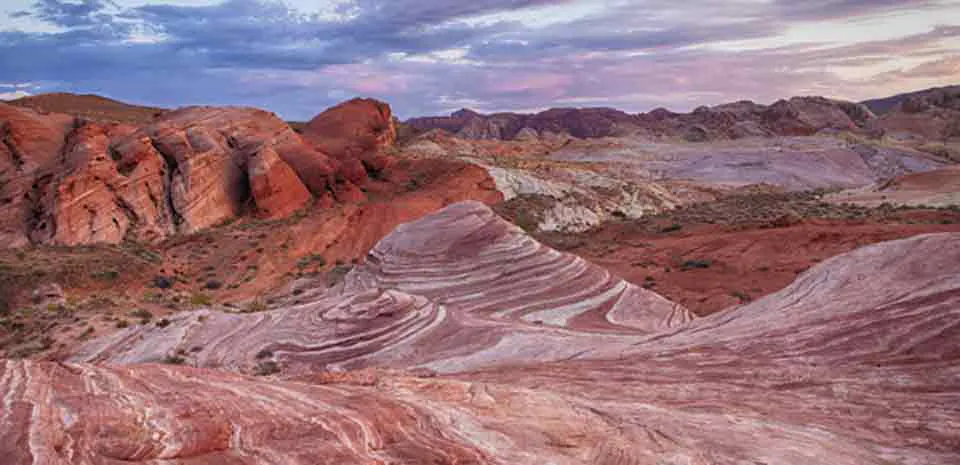
Travel 50 miles north of the city to Valley of Fire State Park and you'll see rocks that glow with an unusually bright crimson color. The area offers some of the Southwest's most amazing scenery with vivid colors splashed on some of the oldest natural rock formations known to mankind.

With its official opening in 1935, Valley of Fire is considered Nevada's oldest state park. The park, which covers an area of almost 36,000 acres, gets its name from its fiery red sandstone. The formations are the result of fossilized sandstone and sand dunes that formed more than 150 million years ago by a shift in the Earth's crust, faulting and wind and water erosion.

"What makes it stand out more than anything is the red sandstone color and the shapes formed here by Mother Nature," said Gary Bates, a tour guide for Casino Travel & Tours. "The scenery out here is absolutely the best thing."

The first inhabitants of the Valley of Fire are thought to have migrated to the region about 300 B.C. Ancient Native American tribes survived on a vegetarian diet and ate all kinds of cactus and plants including yucca, mesquite tree, prickly pear and beaver tail. Eventually, other native tribes learned to plant corn and beans and hunt animals like rabbit, sheep and antelope.

Today, only wild animals dwell within Valley of Fire year-round. Rattlesnakes, kangaroo rats, kit foxes, coyotes, bighorn sheep and the white tailed antelope ground squirrels are just a few of the animals that inhabit the area.

Now the state park is primarily a tourist destination with 300,000 visitors per year. Movie stars have also been known to visit this popular park. Because of its stunning scenery, movies such as "Transformers," "10,000 B.C." and "Planet of the Apes" include scenes filmed at the Valley of Fire.

Fun shapes and sights

In addition to its neon red rock formations, Valley of Fire is famous for its fun, distinct stone shapes. Visitors will see rocks in the shape of a piano, an elephant and even a beehive. Some rocks, however, take on more obscure shapes.

"I let imaginations run wild here," Bates said. "They see one thing, I see another. No one is really wrong here."

Other points of interest include Atlatl Rock, Arch Rock, the cabins and Mouse's Tank, a natural basin in the rocks where water collects after a rainfall. The area was named after a renegade American Indian who used it as a hideout in the 1890s. Rainbow Vista is also popular for its panoramic views of multicolored sandstone.

"One of the beautiful things about Valley of Fire is that there are very few clouds [and] how blue the sky is out here with the red rock shining up against it," he said. "It just makes for some great photography here."

While visiting Valley of Fire, keep a look out for the petroglyphs scattered throughout the park. Visitors can see these ancient Native American sketches at Atlatl Rock, Mouse's Tank, Rainbow Vista, the cabin area, Seven Sisters and Elephant Rock.

A place for recreation

Valley of Fire is more than just a group of beautiful red rock formations. It's also an amazing place to enjoy a variety of recreational activities.

"Spring time and fall is usually the busiest time here," Bates noted. "Valley of Fire is a popular picnic area." In addition to picnics and picture taking, there are also several places to camp. For campers planning a trip to Valley of Fire, Bates says the sunrises are a great reason to wake up early.

"You start getting the real, vibrant [colors] with the sunlight." The sunsets are equally as pretty. "As it goes down," he explained, "it gets orange and the rocks take on a different shade of this bright red out here. Absolutely gorgeous."

During the warmer months, visitors may also go for a relaxing swim at Roger Springs as well as hike or rock climb at various areas. Make sure to stop by the visitor's center to grab a brochure, which lists each landmark and all the different activities. The visitor's center also includes detailed exhibits on the Valley of Fire, Native American artifacts and several works from local artists for sale.

For those who would rather not drive (or who are on a limited time frame), taking a tour is another option. Beverly Strominger, a resident from Philadelphia, took the luxury bus tour with Casino Travel and Tours to Valley of Fire.

"The trip was really fascinating," Strominger said. "It was very interesting to see the different parks and the different deserts, the uniqueness in each one of the formations."

Considering that the park is only an hour's drive from the Las Vegas Strip, Valley of Fire is definitely worth the trip.

"It's a one-of-a-kind area around Las Vegas that is a must-see when you're here in this city," said Bates.

"The scenery out here draws a lot of people every year."

--By Jeannie Borbe