
Recreation

Death Valley National Park

271 Highway 190
Death Valley, NV CA
(760) 786-2392
Map it
Death Valley

Death Valley National Park Details

  • Hours of operation: Visitors center hours are 8 a.m. - 5 p.m., but can vary by location and time of year. Please call for more information.
  • Cost: $10 for individuals on motorcycle or bicycle, $20 per vehicle (valid for seven days); fees vary for tours groups. An annual pass for Death Valley is $40 and an $80 annual nationwide National Parks and Federal Recreation Lands pass is available. For more information contact the Beatty Visitor's Center at (775) 553-2200. Activity Fees: Scotty's Castle Living History Tour Fee: $15.00 per adult; Scotty's Castle Underground  Tour Fee: $15.00 per adult
  • Payment options: Cash, VISA, MasterCard, Discover. Passes may be purchased at automated kiosks or at park information facilities and headquarters.
  • Location / Distance from Las Vegas: About two hours from Las Vegas. From the Strip, take I-15 north to U.S. 95 north. Travel north on U.S. 95 until you reach the Armagosa Valley. Turn left and take Nevada Route 373 South until you reach California Highway 190. Take Route 190 West and follow the signs to Furnace Creek. The Furnace Creek Visitor Center is located just off California Highway 190 in Furnace Creek.
  • Travel options: Private vehicle (tours are also available).
  • On the way: Enjoy the extraordinary, spectacular Mojave Desert scenery.
  • Amenities: There is lodging available at Furnace Creek Inn, Furnace Creek Ranch and Stovepipe Wells. Food, sundries and groceries are available at these locations as well. Surrounding towns such as Tecopa, Shoshone and Beatty offer varying services.
  • What you'll need: Always carry plenty of water and wear a hat, the elements here are intense. Fill up your gas tank before driving to Death Valley National Park. While gas is available at Furnace Creek Gas Station and Stovepipe Wells Gas Station, it is more expensive than outside the park.
  • Annual visitors/busy season: More than one million people visit the park each year. Spring and fall are the most popular and comfortable times to visit.

Death Valley National Park Review

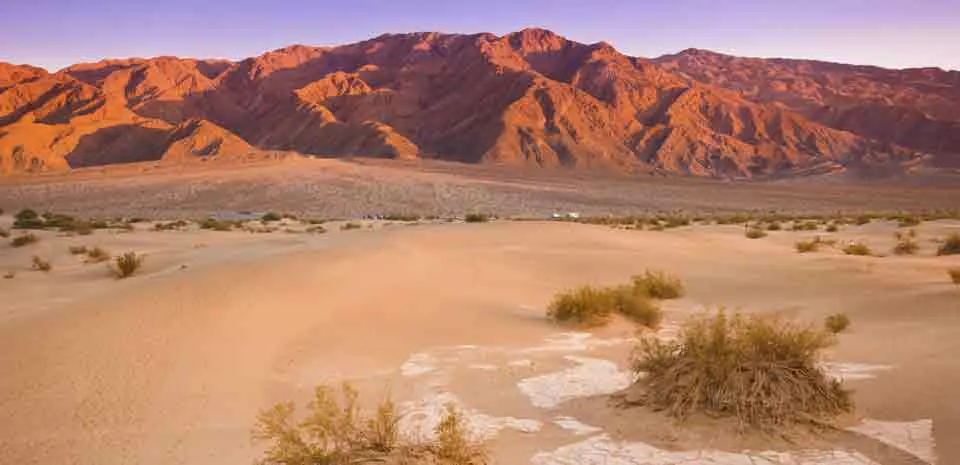
Jagged, rugged, severe, beautiful, sublime -- these are perfect descriptions of Death Valley National Park. 'Surprising' is also a good word for the greater Death Valley area. There are desiccated and colorful desert vistas everywhere. Geological history is on full display. But there are also lush pockets of green plant life, Old West remnants and funky contemporary enclaves in this bigger-than-big wonderland.

The edge of the big drop

Barely two hours away, Las Vegas is the consummate gateway city to Death Valley National Park and its environs -- where the Mojave is at its most magnificent. The first place to head for is Tecopa, Calif., located just southeast of the park. Arriving at Tecopa, follow the signs to China Ranch Date Farm. Descend a dramatic driveway through eroded canyon walls. Stop when you reach the trees -- hundreds of fruit-bearing date palms.

China Ranch is a working family farm that harvests date varieties including Medjool and Black Beauty. Dates and date products like cookies, muffins, bread and their famous date shake are for sale, along with many artistic gifts and curios. There's also a bed and breakfast at China Ranch and a restaurant and developed hot springs back in Tecopa.

From here, you'll head north toward the national park's boundary. It's nearly 85 miles until any services inside the park, so you can stop in Shoshone, Calif. for some gas… and maybe a crêpe, too. Yes, there is a fusion French restaurant in quaint Shoshone -- the tiny and charming Café C'est Si Bon.

Shoshone also has a gas station, general store, traditional roadside restaurant, motel and a remarkably comprehensive museum that documents Death Valley's historic and prehistoric going-ons. It's been an active area for eons.

Going down, down, down

From Shoshone, head into the park. There's no missing the descent into Death Valley's geologic heart -- you'll see the valley floor far ahead but your car will just keep following the curving road for mile after mile. It's an incredible ride. You start at 1,500 feet elevation. Mountains to the west tower to 11,000 feet. You delve to 282 feet below sea level at Badwater Basin and its glowingly white and incredibly flat surface. It's total topography.

Driving through Badwater Basin is surreal. The serrated mountains to the sides of the valley, the pristine lake bed with its briny water and salty crusts -- it all seems so utterly inhospitable.

But for all this severity, Badwater Basin and the surrounding area have supported people for generations -- this is the Timbisha Shoshone tribe's homeland. And tourists from across the world seem to become more familiar and talkative in the extreme weather of the alkaline playa. Some multi-hued vistas near Badwater Basin include Artist Palette, Zabriskie Point and Dante's View. Bring a camera, definitely.

Leisure in Death Valley

The next stop is at Furnace Creek, the park's headquarters. It's still a severe place, but it's much more developed. You'll find a visitor center, hotels, RV parks, museum, restaurants, market, gas station and a golf course, of all things.

This area is close to Stovepipe Wells and Panamint Springs. Both of these areas feature gas stations, lodging, dining and camping amenities. Along with Furnace Creek, these are perfect places to meet and speak with the national forest rangers who are experts on the geology, environment, history and culture of the Death Valley area.

If you're looking to get more remote, drive out on Emigrant Canyon Road. It leads to the rustic Wildrose, Thorndike and Mahogany Flat campgrounds.

That's no mirage, it really is a castle

In the northeastern corner of Death Valley, you'll drive up Grapevine Canyon. At about the halfway point, you'll encounter a few groves of cottonwoods and palm trees to the side of the highway. And then as you come around a bend in the road, you'll find Scotty's Castle, an immense, almost fantastical, architectural vision in this remote region.

When it was created, this intricate edifice was the meeting of a rich Chicago businessman's speculative interest piqued by a desert rat's gold strike tales. Albert Johnson had the lucre, Walter "Scotty" Scott had the local knowledge. Though lustrous veins were never found, an ornate structure was built. These days Scotty's Castle houses a gift store, snack shop, visitor center and museum where unique tours are available. On tours of the Spanish mission-style castle, park rangers dress in '30s garb and lead visitors through rooms and hallways. A tour of the tunnels beneath the castle grounds is available. A highlight of the main tour is the end, where a 1927 Welte theatre organ is demonstrated.

A modern castle deep in the American desert? This is definitely something to tour amidst all the Death Valley ruggedness.

Ruined foundations and rising art

Just outside of Death Valley National Park's northeastern border, close to Beatty, Nev., you'll find testaments to ideas both failed and hopeful in the hardscrabble Mojave landscape.

At Rhyolite, a ghost town like no other awaits. This isn't some Victorian era smattering of withered wood buildings. Rhyolite was founded and died in the modern age: 1904 and 1916, respectively.

Its ruins are defined by stark cement and stone frameworks like Cook's Bank and a railroad station. Rhyolite is closer to our world than most other true ghost towns, and it's apocalyptically eerier for it. Rhyolite also features the enigmatic and playful Goldwell Open Air Museum. This living contemporary sculpture collection features large-scale conceptions like a ghostly revision of DaVinci's "Last Supper" and a towering metal miner with pick axe and 'obligatory' penguin. Other whimsical statuary surround the museum's visitor center.

While Rhyolite's seam of life ran short, Goldwell will offer a rich lode of artistic 'why' to entrance visitors as long as the sculptures stand.

There's room for more Death Valley sightseeing ... plenty of room

This tour of Death Valley touches on some of the area's famous sites and a few of its little known points of interest. But there are many more features to see.

The wind-pushed, mud-sliding rocks of the Racetrack Playa have been challenging geologists and amateur scientists for years. The massive volcanic terrain of Ubehebe Crater, verdant Dar win Falls and the oasis of Ash Meadows National Wildlife Refuge are all scenic spots worthy of their own side trips. In Death Valley Junction, delight in the spectacular murals painted by Marta Becket that cover the interior of the Amargosa Opera House. An entire audience of characters has been created by Becket's clever brush. Live audience members are welcome to join the painted ones during scheduled performances.

These and other desert delights await -- all just a day trip away from Las Vegas.

-- Review by Greg Thilmont

Check out available tours